
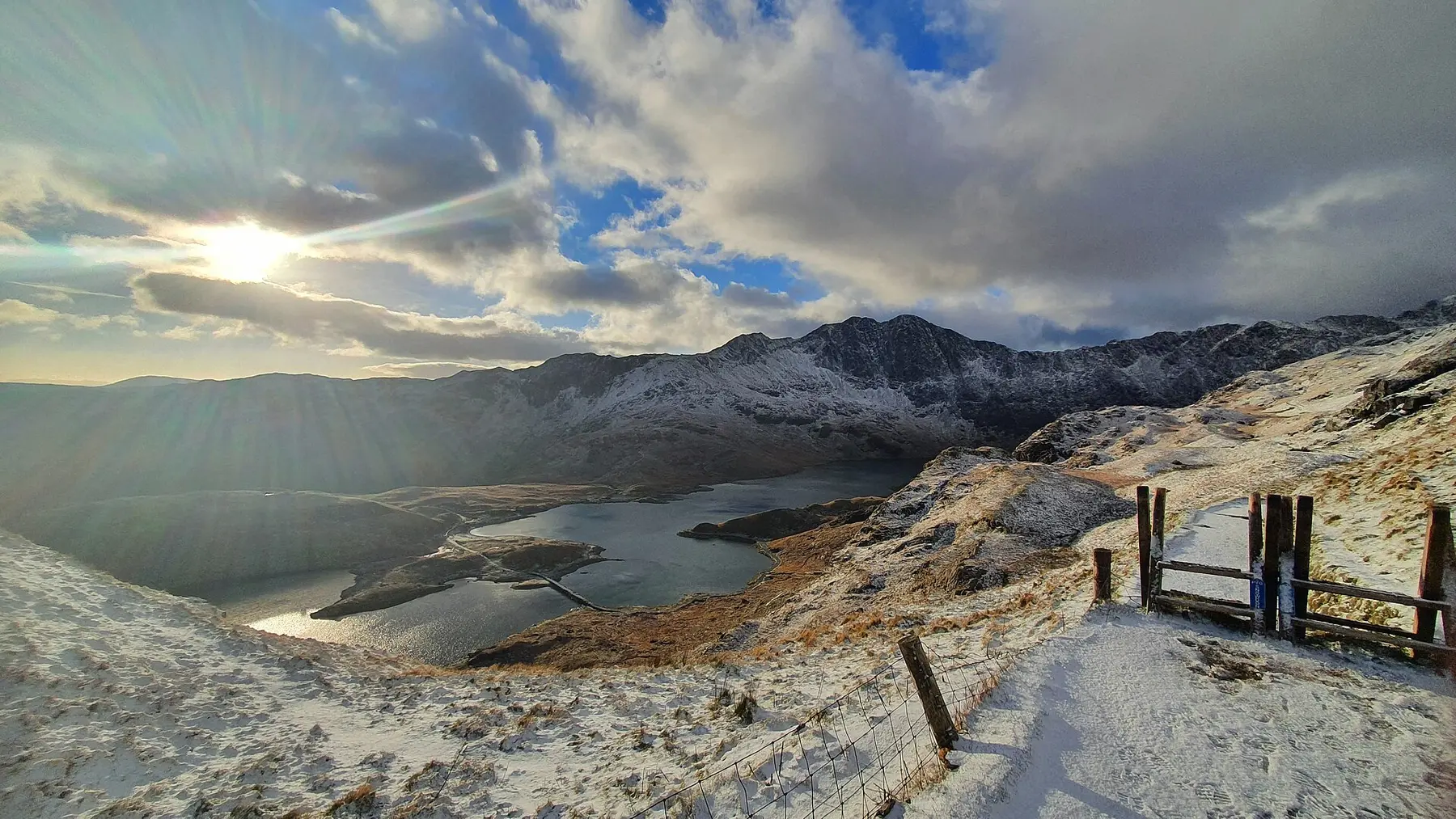
Wales does not give you a right to wild camp. Both national parks say so in almost the same words: without the landowner’s prior permission, you cannot legally camp. That is the answer, before any of the exceptions and the internet folklore.
This is the single point where a lot of English-language writing about “wild camping in the UK” is wrong. It groups Scotland and Wales together, and it should not. Scotland has a statutory right of responsible access to most land under the Land Reform (Scotland) Act 2003, and it covers lightweight camping in a tent. Wales has no equivalent Act and no equivalent right. What the Scottish Access Code allows is a Scottish position, and it does not cross the border.
What Eryri says
The Eryri (Snowdonia) National Park Authority is direct. Its official camping page states: “Wild camping is not permitted anywhere in Eryri without prior permission from the landowner or farmer.” The park adds that it owns very little land itself, so it cannot grant consent for camping on land that is not its own, and it points to the Countryside and Rights of Way Act (CROW) as the framework: wild camping is not a permitted activity unless the landowner grants permission.
Two more lines from the same page that people miss:
- “Camping in car parks or on roadside verges is not allowed at any time.”
- “Staying overnight at a car park in a campervan or caravan is not permitted in Eryri National Park.”
The park’s own recommendation is unambiguous: “The best way to enjoy camping in Eryri National Park is to camp at an official campsite.”
Verified against Eryri’s page on 29 July 2026.
What Bannau Brycheiniog says
Bannau Brycheiniog (Brecon Beacons) says the same thing in fewer words: “Wild camping, though appealing, is illegal without the landowners permission.” The authority also notes that “most land in the National Park is privately owned, with specific uses like farming or conservation, making permission for wild camping difficult to obtain.”
Neither park names an altitude at which wild camping becomes permitted. What you may hear from other hikers about “above 450 meters” or “on the ridgelines” is folklore, not park policy. It may be what happens in practice on a quiet weekend, and nobody may come and move you on. That is not the same thing as permission, and it is not the sentence to plan a trip around.
Verified against Bannau Brycheiniog’s page on 29 July 2026.
Wales is not Scotland
The practical difference is worth spelling out. In Scotland, a lightweight tent on unenclosed land for a night or two, in small numbers, well away from buildings and roads, is inside the Outdoor Access Code. In Wales, the same tent in the same conditions is trespass unless the landowner said yes.
A camp does not become a right by being polite. Leave no trace is a code of conduct for people who are already permitted to be there. It does not create a permission where none exists.
What to do instead
Two routes, and both involve talking to somebody first.
Ask the landowner. For a single farm above a village, the farmhouse door is usually the whole process. Both parks are direct that permission is what makes camping legal on private land, and both list approved campsites on their own pages if you would rather skip the door-knocking.
Use a designated campsite. Both parks recommend this, and it is the honest answer for most nights. Booking in advance matters in Eryri in the peak season, and a summer arrival with no plan is how people end up parked in a spot the park has said in writing they may not use.
And the vehicle question
Nothing in either park’s position turns on a vehicle. Eryri’s line about car parks and roadside verges is explicit. A campervan or motorhome does not sidestep the rule that applies to a tent. If you want a legal overnight for a vehicle, the answer is a booked pitch, not the far corner of a national-park car park.
The sign wins
Where a posted sign or the current guidance of the landowner, park authority or local council differs from this page, they are right and this page is out of date. Ranger patrols, seasonal notices and byelaws change from year to year in both parks. Read the sign at a car park entrance or on a footpath before you rely on anything you found online, including us.
If you are planning where you can legally sleep on a Welsh trip, the rules pages list the frameworks we have verified, and the wild-camping topic hub covers the countries where the answer comes out differently.
Sources
- Camping and Wild Camping, Eryri National Park Authority
- Camping, Bannau Brycheiniog National Park Authority
When a source is not in English, follow the link for the official wording.