
You need the landowner’s permission to wild camp in the Peak District, and there is no general workaround. The National Park Authority puts it in three flat sentences: there is no provision under the Countryside and Rights of Way Act for camping on open access land, you may be trespassing if you do not have permission from the landowner, and in some circumstances the use of land for camping will need planning permission. It adds that it does not allow wild camping on any land it owns and would encourage use of authorised campsites. Verified against the Authority’s camping page on 25 August 2026.
The National Trust owns a large share of the high moors around Kinder Scout and Edale, and it lands in the same place: wild camping is only permitted with landowner permission, and it asks campers to plan ahead and book a campsite before visiting. Two of the biggest landholders on the moors, one answer.
The right to roam is not a right to camp
This is where most people go wrong, and it is worth being precise about. Open access land under the CROW Act gives you recreation on foot: walking, running, climbing, picnicking, photography, bird watching. The Authority’s own FAQ on access land lists what it does not give you, and camping is on the list, next to lighting a fire, shooting, fishing and metal detecting. Taking vehicles or motorcycles onto access land is a separate prohibition on the same page.
Two practical things follow. Access land is mapped, on Ordnance Survey Explorer maps and on Natural England’s online maps, so you can see exactly what you are standing on. And it closes: landowners can shut it for land management, public safety or conservation, and it can be closed at times of exceptional fire risk. Check Natural England’s restrictions before a dry-spell trip rather than after the drive.
No fires, and read that wording carefully
The National Trust’s guidance for its High Peak land is that barbecues, campfires and outdoor cooking equipment are not permitted anywhere in the Peak District National Park, and its Kinder page carries a standing notice repeating it in hot and dry conditions. Note that it says outdoor cooking equipment, not just fires, so a gas stove is not the usual loophole here. The Authority’s access land FAQ prohibits lighting a fire independently of that. Cold food or a hot meal at the pub.
In a vehicle, the answer gets shorter
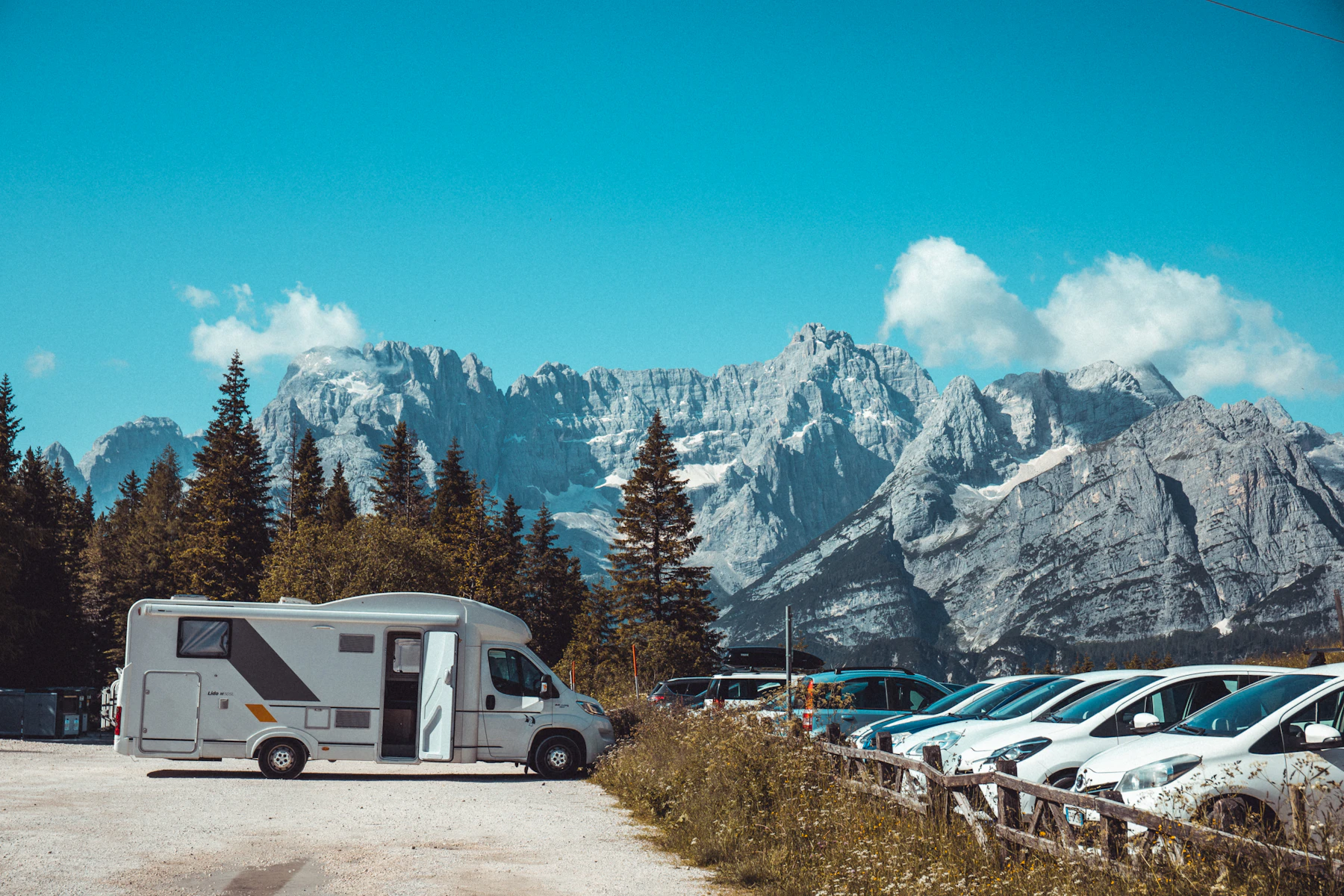
The Authority runs 44 car parks, 13 of them free, and its parking page is unambiguous: overnight parking or camping at all of our car parks is prohibited and may be subject to patrols and enforcement action. Daytime is a different question and the same page is helpful on it. None of the car parks have height barriers, so they suit small to medium motorhomes where spaces are available, with Bakewell Station excluded for lack of room. Charges run 9am to 6pm every day and a full day is 6.60 pounds. Carry coins as well as a card, because the Authority warns that some rural machines are coin only or card only. It also asks you not to park on grass verges, on double yellows, by farm gates or on other undesignated ground.
England answers this way almost everywhere. Dartmoor is the exception, where the National Park Authority maps the ground you can backpack camp on without asking the landowner, and even there it states there are no overnight stays in vehicles, campervans or motorhomes. Scotland is the other regime entirely: lightweight camping in a tent, small numbers, no more than two or three nights in one place, with the access code noting that access rights do not include motor vehicles. Nothing in either reaches the Peak District. The Lake District sits closer to home, where the Authority also refuses permission but publishes the conditions its landowners tolerate.
What actually works here
Book something. The Authority owns and manages North Lees Campsite at Stanage, tents or camping pods. The National Trust points walkers at Upper Booth in the Edale valley, which is the practical base for Kinder.
If you are in a van, the useful rule is the 60-day one. A landowner can run a temporary campsite for up to 60 days a calendar year, with up to 50 pitches, and the Authority states those pitches include motorhomes and campervans, though not conventional caravans. The landowner has to notify the Authority in writing before starting, with a site plan and toilet and waste details. That is why pop-up field campsites appear across the Peak in summer. They are legal, they take vans, and they are the closest thing to a wild pitch that a vehicle can legally have here.
Ask before you pitch anywhere else. A farmer who says yes has given you the one thing the law asks for, and a ranger’s instruction or the sign at the car park entrance beats this page or any page. If the notice on the ground says something different, the notice is right and we are out of date.
For how the rest of the UK and Europe answer the same question, the wild camping rules hub is the index, and every framework we have verified is listed on the rules pages.
Sources
- Camping, Peak District National Park Authority
- FAQs: Access land, Peak District National Park Authority
- Park and protect: our car parks, Peak District National Park Authority
- Our work at Kinder, Edale and the High Peak, National Trust
- Camping, Dartmoor National Park Authority
- Camping, Scottish Outdoor Access Code
When a source is not in English, follow the link for the official wording.