What you are arriving at
What the sign says
Nothing is listed in Galicia yet, so read the sign at whatever you find and treat that as the rule.


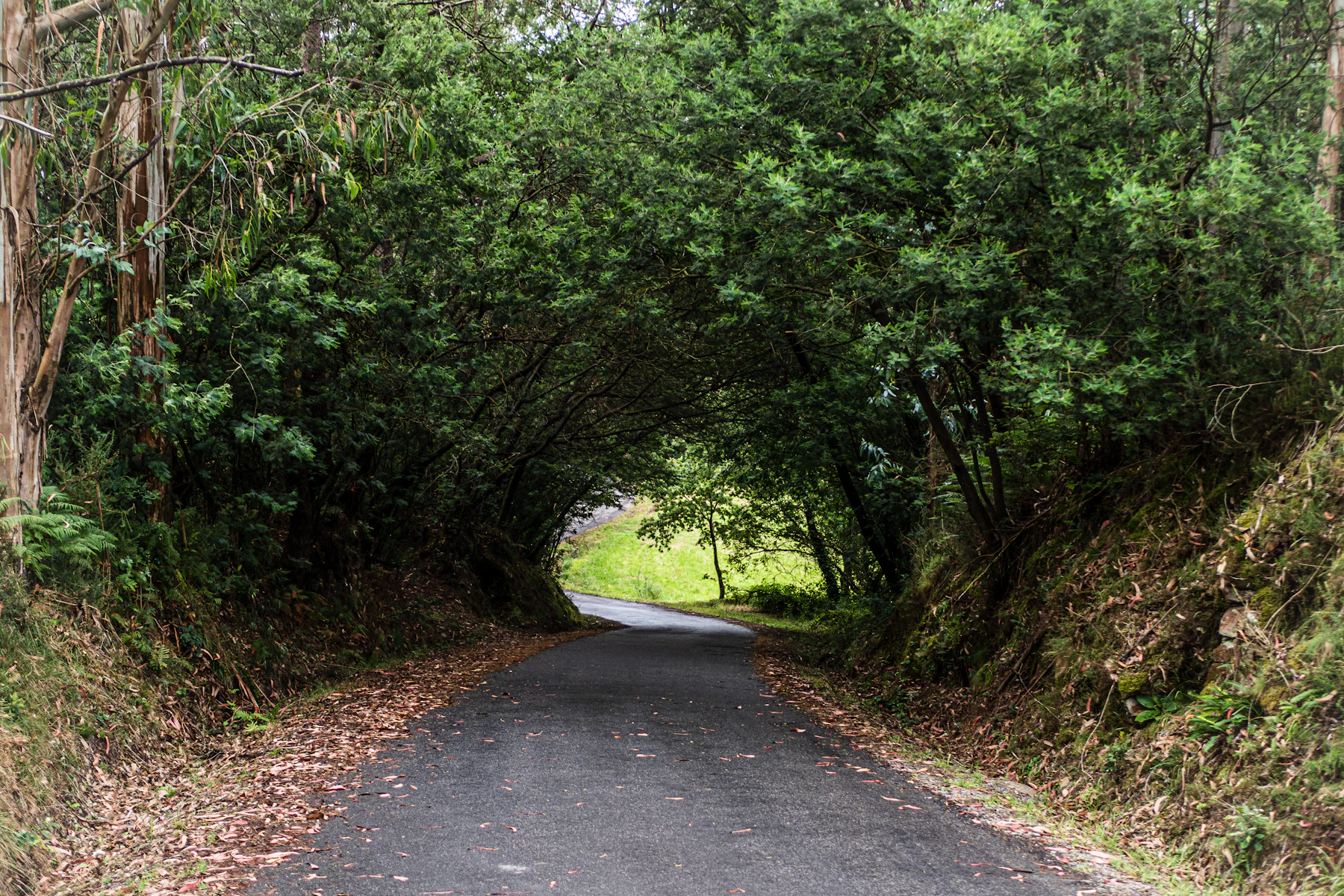
Galicia is green, wet and Atlantic. The Xunta publishes checkable área de autocaravanas records on its own tourism portal, and Galicia is also the one comunidad autónoma whose camping decree the DGT quotes as a prohibition.
01 · Map
02 · Every place · 0
Nothing here yet
Plan this leg around a neighboring region instead, and do not build the night around a listing copied off an app. The regions below have places you can check before you set off.
Regions in Spain that do have places:
03 · Before you go
What you are arriving at
Nothing is listed in Galicia yet, so read the sign at whatever you find and treat that as the rule.
Fees
Free parking and free services are two different things. Where a place charges for water or power, its own page says so. Carry coins for the ones with no price posted.
Season
None of these stopovers publishes opening hours. Where no season is published, treat the water as something to confirm rather than something to plan around, and arrive with a full tank in the cold months.
04 · The detail
Galicia does not look like the Spain most people picture, and it does not behave like it either.
This is the Atlantic northwest: green hills, drowned river valleys called rías cut deep into the coast, granite villages, eucalyptus and oak, and a sea that is worked rather than sunbathed on. Santiago de Compostela records 1,787mm of rain a year on AEMET’s 1981 to 2010 reference period. Valladolid, four hours east on the meseta, gets 433mm. The climate is closer to Ireland’s than to Andalusia’s, and the food follows the water: this is the shellfish coast, and the pulpo, percebes and mussels are the point of eating here.
It is also where the Camino de Santiago ends, which puts an unusual amount of foot traffic and an unusual number of small pilgrim towns into a region that is otherwise thinly populated.
Start with the Spain country page, which sets out the national framework: estacionar, parking, is traffic law, and acampar, camping, is regulated by the comunidades autónomas and the towns.
Galicia is the region the DGT explicitly marks as going the other way from most of its neighbors. Instrucción PROT 2026/04, checked 20 July 2026, quotes article 1.4 of Decreto 159/2019 on campamentos de turismo: tourist camping outside campamentos authorized by the Galician tourism authority is prohibited, and for these purposes tourist camping is any camping that provides temporary accommodation to people. The DGT also records that the Galician decree says this without mentioning traffic law at all, where Catalonia, Asturias, Cantabria, the Basque Country and Extremadura each wrote in an explicit clause stating that a correctly parked motorhome is not camped.
Two things follow. A clause that exists in Asturias does not exist here, so do not carry it across the border. And the Galician decree does not say what its prohibition means for a parked motorhome, so if your trip turns on that, read Decreto 159/2019 itself before you rely on either reading of it.
In practice, use a town’s own área rather than a street. Each Galician town writes its own ordenanza municipal, and that is the layer that governs where you can leave a vehicle overnight.
Galicia has something no other Spanish region covered here has: the regional government publishes its own records. turismo.gal, the Xunta de Galicia’s tourism portal, carries structured entries for áreas de autocaravanas with services, fee status and sometimes a stay limit. Open it before you drive to a stop and you will know more here than you can anywhere else in Spain.
Ourol, in the Lugo hill country near the Sierra do Xistral, is the fullest of them: 8 large spaces, with a wastewater terminal, two water taps, one for toilets and one for drinking, waste disposal and an electricity hookup shared between each pair of spaces. Maximum stay 48 hours. There is a picnic area, a playground and outdoor gym equipment around it, a municipal pool 100 meters away that costs 2 euros in summer, and the nearest fuel station is 15km away at Viveiro. That last figure is the useful one. Fuel is not close in inland Lugo.
Mazaricos, at A Picota out toward the Costa da Morte, publishes 4 spaces with electricity, drinking water and grey and black water disposal, next to the health centre. Cospeito, on the Terra Chá near its protected lagoon, is listed as free with drinking water and both discharges, with the town 300 meters away and overflow parking at the Campo da Feira. Ponteceso, on the ría beside the Casa da Cultura, is listed as a municipal service area that is free and has water and both discharges, and the portal is honest that it has no marked motorhome bays. It is a service point and a place to stop, not a laid-out área.
None of the four publishes a fee beyond being marked free, and only Ourol publishes a limit.
Summer is the season, and it is a cool one. Santiago averages a July maximum of 24.3C and a July minimum of 13.0C. Galicia in July and August is pleasant when the meseta and the south are punishing, which is why Spanish holidaymakers come north. It is also when the coast is busiest and when the pilgrim numbers peak, so the small towns on and near the Camino are at their fullest.
It rains in every month. There is no dry season the way there is in Andalusia, only a less wet one. July is the driest month at Santiago and it still rains. Bring the wet-weather version of your plan rather than treating rain as the thing that ruins it, and expect grass pitches and unpaved surfaces to be soft.
Winter is mild and dark rather than cold. A January maximum of 11.2C at Santiago is warmer than Valladolid’s 8.2C and far warmer than the meseta’s nights, but the daylight is short and the weather comes off the Atlantic in sequence. Winter here is workable and very quiet. It is not the winter-sun alternative to Andalusia, and nobody should treat it as one.
Spring and autumn are underrated. May, June, September and October give you the greenest version of the region, working services and almost nobody at the áreas. October is genuinely wet.
The geography costs you time. Rías mean the road goes around, not across. Distances on the Galician coast take much longer than the map suggests, and inland Lugo and Ourense are slow, empty and short of fuel stations. Ourol’s own listing puts the nearest one 15km away, and that is normal.
Galicia is the near miss. The Xunta’s tourism portal, turismo.gal, carries structured área records with services and fees on them, which is more than most Spanish regions manage. What it does not have is a single complete register you can work through the way Castile and León’s can be worked through, so nothing from Galicia is mapped here yet.
Use turismo.gal directly. The four áreas it marks as free are the ones named above: Ponteceso and Mazaricos out towards the Costa da Morte, and Cospeito and Ourol up in Lugo province. Only Ourol publishes a maximum stay, at 48 hours, and it has the most on the ground: 8 large spaces, a wastewater terminal, two water taps and an electricity hookup shared between each pair.
The method that works anywhere in Spain: search the ayuntamiento’s own site for “área de autocaravanas” and the town name, then read that town’s ordenanza municipal for what its streets allow. It is slow, and outside Castile and León it is the only reliable way, so do it the evening before rather than the afternoon of.
Galicia is also the region where the rule matters most. The DGT quotes Decreto 159/2019 as prohibiting tourist camping outside authorized campamentos, so the gap between parking and camping is narrower here than almost anywhere in Spain. Use the área, keep everything inside the vehicle, and read the section above before you rely on a lay-by.
05 · Frequently asked
Galicia is the region the DGT singles out as going the other way. Instrucción PROT 2026/04 quotes article 1.4 of Galicia's Decreto 159/2019 on campamentos de turismo: tourist camping outside campamentos authorized by the Galician tourism authority is prohibited, and for those purposes tourist camping is any camping that provides temporary accommodation to people. The DGT notes that the Galician decree says this without mentioning traffic law at all, where several other regions wrote in an explicit clause saying a correctly parked motorhome is not camped. Read the Spain page for the framework, do not carry another region's clause across the border, and use a town's own área rather than an ordinary street.
Wet enough to change how you travel. Santiago de Compostela Aeropuerto records 1,787mm of rain a year on AEMET's 1981 to 2010 reference period, with a July average maximum of 24.3C and a January maximum of 11.2C. For comparison, Valladolid on the meseta gets 433mm. Galicia is mild in winter and cool in summer, and it rains in every month of the year. Plan for drying clothes, not for shade.
The Xunta's own tourism portal marks all four as free areas: Ponteceso, Mazaricos, Cospeito and Ourol. Only Ourol publishes a maximum stay, at 48 hours. The others publish no limit, so read the sign at the entrance for it. Ourol also has the most infrastructure in the region: 8 large spaces, with a wastewater terminal, two water taps and an electricity hookup shared between each pair.
The geography works and the network does not follow the route. Galician áreas are spread across the four provinces rather than lined up along the Camino Francés, and the four with an official page sit at Mazaricos and Ponteceso out toward the Costa da Morte, Cospeito and Ourol up in Lugo province. If you are supporting a walker, expect to plan around a place that happens to be near the route rather than one built for it.
On turismo.gal, the Xunta de Galicia's own tourism portal, which publishes structured área records with services and fees attached. That is the nearest thing to an official regional listing anywhere in Spain apart from Castile and León's. It marks four áreas as free: Ponteceso and Mazaricos out towards the Costa da Morte, and Cospeito and Ourol in Lugo province. Only Ourol publishes a maximum stay, at 48 hours. Use the portal to confirm a stop rather than turning up on the strength of a pin.
06 · Nearby