

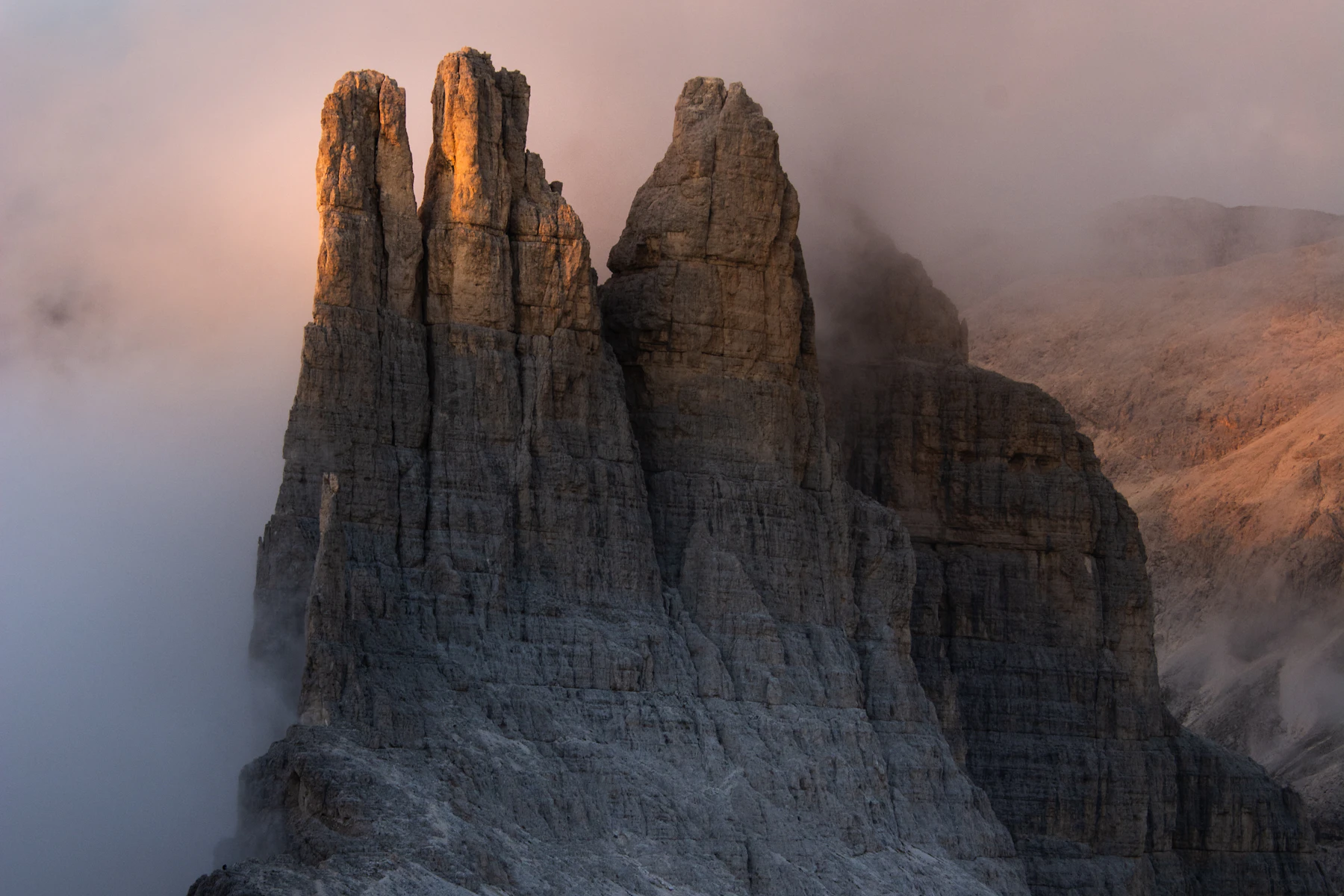
Free camping and aree di sosta in Italy
Italy's stopover is the area di sosta, and one with services is an area attrezzata. Article 185 of the Codice della Strada says a motorhome resting on the ground only through its wheels, taking up no more road than the vehicle itself, is parked rather than camped.
01 · Map
Free stopovers in Italy
Open any pin for its fee, its services and the date it was last checked. For wild camping, read the rules below rather than the map. Where this comes from
Open the full mapMapLibre GL · OpenFreeMap · loads on scroll
02 · Recently checked
Stopovers checked most recently
 SostaFree
Area Attrezzata Castelnovo ne’ Monti
Emilia-Romagna · N 44.43°
- TrinkwasserTrinkwasser: Bestätigt
- ToilettenToiletten: Nicht bestätigt, verlass dich nicht darauf
- DuschenDuschen: Nicht bestätigt, verlass dich nicht darauf
- StromStrom: Bestätigt
- EntsorgungsstationEntsorgungsstation: Bestätigt
Checked Jul 22
SostaFee not statedArea camper di Roncole Verdi, Via Carlo Verdi
Emilia-Romagna · N 44.95°
- TrinkwasserTrinkwasser: Nicht bestätigt, verlass dich nicht darauf
- ToilettenToiletten: Bestätigt
- DuschenDuschen: Nicht bestätigt, verlass dich nicht darauf
- StromStrom: Nicht bestätigt, verlass dich nicht darauf
- EntsorgungsstationEntsorgungsstation: Nicht bestätigt, verlass dich nicht darauf
Checked Jul 22
 SostaPaid · € 18,00 ogni 24 ore
Area di sosta camper di Pavullo nel Frignano
Emilia-Romagna · N 44.34°
- TrinkwasserTrinkwasser: Bestätigt
- ToilettenToiletten: Bestätigt
- DuschenDuschen: Nicht bestätigt, verlass dich nicht darauf
- StromStrom: Bestätigt
- EntsorgungsstationEntsorgungsstation: Bestätigt
Checked Jul 22
SostaFee not statedArea Attrezzata Camper Carpineti
Emilia-Romagna · N 44.46°
- TrinkwasserTrinkwasser: Nicht bestätigt, verlass dich nicht darauf
- ToilettenToiletten: Nicht bestätigt, verlass dich nicht darauf
- DuschenDuschen: Nicht bestätigt, verlass dich nicht darauf
- StromStrom: Bestätigt
- EntsorgungsstationEntsorgungsstation: Bestätigt
Checked Jul 22
Most recently checked first, so the ones at the top are the least likely to have changed since.
03 · Regions · 4
By region
04 · Every place
All 65 places in Italy
Emilia-Romagna 21 places
- Area Attrezzata Camper Carpineti
- Area Attrezzata Castelnovo ne’ Monti
- Area camper di Roncole Verdi, Via Carlo Verdi
- Area di sosta camper di Pavullo nel Frignano
- Area di sosta camper di Pinarella, Via Tritone angolo via Caduti per la Libertà
- Area di sosta camper Fangacci (Pian dei Fangacci)
- Area di sosta camper in viale Giovanni XXIII
- Area di Sosta Fontanalda
- Area di sosta per camper di Santa Maria del Taro
- Area sosta camper
- Area Sosta Camper "Matildica"
- Area sosta camper “Secondo Casadei”
- Area sosta camper attrezzata, Torrione Fodesta
- Area sosta camper Corniolo
- Area sosta camper di Pinarella di Cervia, via Europa Unita
- Area sosta per autocaravan di Scandiano
- Castelnuovo Rangone camper park (Area camper Montale Rangone)
- Parcheggio camper di Marina di Ravenna, via del Marchesato
- Parcheggio camper di viale Oriani
- Parcheggio P5, via Niero
- Piazzale 7 Fratelli Govoni
Piedmont 20 places
- Area Attrezzata
- Area attrezzata, Casale Campiglie (Sosta camper)
- Area Camper "La Valle"
- Area Camper Comunale, Rueglio
- Area camper di Belveglio (Via Garibaldi)
- Area camper di Pinerolo
- Area Camper di Sagliano Micca
- Area Camper Mirabello Monferrato
- Area camper, San Salvatore Monferrato
- Area di sosta camper di Saluzzo capoluogo, presso il parcheggio "Bodoni"
- Area di sosta per camper di piazza Libertini
- Area sosta camper "Lago Tana"
- Area sosta camper attrezzata, Berzano di San Pietro
- Area sosta camper, piazzale Sperico
- Camper service, Dronero, Piazza Don Raviolo
- Nuova area sosta Camper a Castiglione Falletto
- Punto sosta Camper, Meana
- Punto Sosta e Camper Service, presso Cornaletto
- Punto sosta, Camper service (carico / scarico), Garessio
- PUNTO SOSTA, CAMPER SERVICE (carico / scarico), localita Piave
Tuscany 9 places
- Area attrezzata per camper a Montepiano
- Area camper Il Pianetto
- Area Camper in localita' Le Fornaci
- Area Camper: servizi e accesso, area di sosta attrezzata di piazza Comunardo Ferrucci
- Area di sosta attrezzata per camper di Marradi
- Area di sosta attrezzata per camper, Parcheggio "Il Casone"
- Area di Sosta Camper di Fosdinovo
- Area Sosta Camper attrezzata "Spazio Fossatello"
- Punto sosta camper Loc. Gorazzaio
Veneto 15 places
- Area attrezzata di sosta temporanea ai fini turistici di Via Aldo Moro
- Area attrezzata di sosta temporanea camper di Via Valsugana
- Area Camper "Porta Palio"
- Area Camper (località La Bella)
- Area camper Segusino
- Area sosta camper "Paolo Zaffani"
- Area sosta camper comunale Lamon
- Area sosta camper loc. Facen
- Area sosta camper Ronca
- Area sosta camper San Martino Buon Albergo
- Area sosta Camper Schio
- Area sosta camper Selva di Progno
- Area sosta camper Soave
- Parcheggio Retelino
- Pra' del Vescovo Area Camper
05 · How it works here
Free camping in Italy, explained
The word you are looking for is area di sosta, often shortened to sosta. It means a place set aside for motorhomes to stop. If it has services on it, a drinking water tap and a drain for grey water and chemical waste, the sign will usually say area attrezzata, an equipped area. You will also meet area camper and area sosta camper used for the same thing, because Italy has never settled on one term the way France settled on aire.
Most are municipal, run by the comune. Many are free, some charge a few euros, and a good number are a marked strip of a public car park rather than a dedicated site. Do not carry French expectations across the Alps. An area di sosta promises a place to park. It does not promise water.
Article 185: the line is drawn at the wheels
This is the load-bearing legal point in Italy, and it is worth reading in the original.
Article 185 of the Codice della Strada, headed Circolazione e sosta delle autocaravan, governs motorhomes, which Italian law calls auto-caravan (the sign and the everyday word is camper). Comma 2 says:
La sosta delle auto-caravan, dove consentita, sulla sede stradale non costituisce campeggio, attendamento e simili se l’autoveicolo non poggia sul suolo salvo che con le ruote, non emette deflussi propri, salvo quelli del propulsore meccanico, e non occupa comunque la sede stradale in misura eccedente l’ingombro proprio dell’autoveicolo medesimo.
Our summary, and the Italian is the authority: the sosta of a motorhome, where it is permitted, on the road does not constitute camping, pitching or anything similar, provided the vehicle rests on the ground only through its wheels, emits no flows of its own except those of the mechanical engine, and does not occupy the road beyond its own footprint. Verified against the ACI text of the article on 20 July 2026.
Three things follow from that, and the third is the one people miss.
- Wheels only. Drop levelling legs or stabilizers and the vehicle is no longer resting on the ground solely through its wheels. On the text of the article, that is the trigger.
- No wider than the vehicle. Anything that puts you over the outline of the van in plan takes you outside comma 2.
- Dove consentita. Where permitted. Comma 2 tells you what parking is not. It does not tell you that you may park. Comma 1 puts motorhomes under the same regime as other vehicles for the bans and limits in articles 6 and 7, which is where the comune’s power to restrict lives.
Two other commas matter on the road. Comma 3 says that in paid parking, motorhomes pay tariffs 50% higher than cars in comparable parking in the same zone. Comma 4 prohibits discharging organic residue and clear and dirty water on roads and public areas outside dedicated sanitary disposal installations, and comma 5 extends that prohibition to any other vehicle with internal collection tanks. The ACI text of comma 6 sets an administrative penalty of 87 to 344 euros for breaching commas 4 and 5. Emptying a cassette into a drain is not a gray area here. It is named in the code.
ZTL: the cameras in every historic center
A zona a traffico limitato, ZTL, is a restricted traffic zone. Almost every Italian town of any age has one over its historic center, and it is the single most common way a visiting driver gets a notice in the post months later.
Article 7, comma 9 of the Codice della Strada gives the power to the comune:
I comuni, con deliberazione della giunta, provvedono a delimitare le aree pedonali e le zone a traffico limitato tenendo conto degli effetti del traffico sulla sicurezza della circolazione, sulla salute, sull’ordine pubblico, sul patrimonio ambientale e culturale e sul territorio.
Verified against the ACI text on 20 July 2026. The comune delimits pedestrian areas and ZTLs by deliberation of its giunta. That is why the rules differ from town to town: there is no national ZTL, there are hundreds of municipal ones.
How they work in practice. Entry points are gated with cameras that read plates. A foreign plate is not invisible to them. Each gate is enforced separately, so crossing three gates in the course of one wrong turn is three violations, not one. Hotels inside a ZTL can often register your plate for an exemption, but that is arranged with the comune and it has to happen, not be assumed. Satnav routing will take you straight through a ZTL unless you have told it not to.
What it costs. Look up the ZTL page on the website of the comune you are driving into. Penalties are issued under article 7 of the Codice della Strada and the amount is set by comune, so the only figure worth having is that comune’s own. It set the zone and it issues the notice.
For a motorhome the practical answer is simpler than the legal one: park outside the center and walk in. A 7m van in a medieval street is a bad idea before you get to the question of whether it is legal.
Who actually sets the camping rules
There is no single national answer, and any page that gives you one is guessing.
Article 185 is traffic law and it is national. Camping is not. Comuni set parking and overnight rules on their own roads by ordinanza, and regions legislate on tourism and on campsites. The result is that the answer changes across a municipal boundary, and a page describing what one Tuscan comune permits tells you nothing about the next one.
The pattern worth knowing before you plan a coastal route: coastal comuni commonly restrict motorhome overnight parking during the season, in the stretches where the demand is. That pattern tells you where to expect a restriction, not whether one applies to the car park you are standing in. Look up the comune’s own site, or ask at the comune office, and read the sign at the parking area.
Seasons, and why Italy has more than one
Italy runs roughly 1,200km north to south and tops out over 4,000m, so treating it as one season is the mistake.
August is the constraint. August is when Italy itself goes on holiday. The coasts fill, coastal parking fills with them, and the aree di sosta that are busy at all are busy then. If your trip is flexible, June and September are a different country.
The Alps and the Dolomites are a mountain season. High passes and high stopovers are a summer proposition, and water points on exposed sites are commonly shut off in the cold months because standing water in an exposed pipe freezes and splits it. That is a general mechanism rather than a rule, and it applies to municipal and private sites alike.
Sicily and the far south run on a different calendar entirely, with a mild winter and a hot, dry summer. Northern Europeans who winter in southern Spain do the equivalent here.
Where a record carries opening hours, they are on it as the source wrote them. Where a record shows none, check the comune’s own page or plan a fallback for that night. An empty field is not a promise that the site is open all year.
See the map
Everything above is plotted on the Italy map. Italian place data comes from OpenStreetMap contributors under the ODbL 1.0.
The sign wins
The posted sign at the entrance and the comune’s current guidance beat this page, every time. Ordinanze get rewritten, seasonal restrictions come and go, a ZTL boundary moves, a free area starts charging, a height barrier appears. None of that reaches us the day it happens. Read the sign, and if the sign and this page disagree, the sign is right.
Where the numbers here come from: 65 aree di sosta written up from the comuni’s own pages across four regions, which is everything the map shows, so every pin on it has a page behind it. A further 327 places carrying a free label in OpenStreetMap are logged and not yet checked against their comune. Italy has no national open dataset for motorhome stopovers, so that checking is done one comune at a time and the written set grows slowly. A blank stretch of map means unwritten rather than empty. What the data covers, and what it does not
06 · Frequently asked
Coming to Italy.
What is an area di sosta in Italy?
An area di sosta is a place set aside for motorhomes to stop, often a marked corner of a municipal car park. An area attrezzata is the same thing with services on it, normally a drinking water tap and a drain for grey water and chemical waste. The Italian words are not standardized the way the French ones are, so you will also see area camper and area sosta camper on signs and on comune websites meaning much the same thing. Read the board at the entrance rather than the word on the sign.
Can I sleep in my motorhome parked on an Italian street?
Article 185, comma 2 of the Codice della Strada says that the sosta of an auto-caravan, where it is permitted, on the road does not constitute campeggio, attendamento or anything similar, provided the vehicle rests on the ground only through its wheels, emits no flows of its own except those of the engine, and does not occupy the road beyond the vehicle's own footprint. Verified against the ACI text of the article on 20 July 2026. Read the conditional clause carefully: dove consentita, where permitted. The article tells you that parking is not camping. It does not tell you that you may park in any given spot, and the comune decides that.
Is wild camping legal in Italy?
It depends on the comune, and there is no single answer for the country. Camping outside a designated site is regulated by the comune and by regional law, so the answer changes when you cross a municipal boundary, let alone a regional one. Coastal comuni commonly restrict motorhome overnight parking in season. Look up the comune's own site for where you are heading, read the sign at the parking area, and use an area di sosta if you want a night you do not have to argue about.
What is a ZTL and will it catch me?
A zona a traffico limitato is a restricted traffic zone, usually covering a historic center. Article 7, comma 9 of the Codice della Strada gives comuni the power to delimit pedestrian areas and ZTLs by council deliberation. Entry is camera-enforced at each gate, and each gate you cross is treated as a separate entry. For what it costs, look up the ZTL page on the website of the comune you are driving into: penalties are issued under article 7 and the amount is set by comune, so a figure from a forum tells you nothing. In a motorhome the simpler answer is to park outside the center and walk in.
Can I empty my waste tank in Italy?
Only at a proper disposal point. Article 185, comma 4 of the Codice della Strada prohibits discharging organic residue and clear and dirty water on public roads and public areas outside dedicated sanitary disposal installations, and comma 5 extends the same prohibition to other vehicles carrying internal collection tanks. The ACI text of comma 6 gives an administrative penalty of 87 to 344 euros for violating commas 4 and 5. Verified against ACI on 20 July 2026.
Where in Italy will I actually find free stopovers?
Four regions are written up here from the comuni's own pages: Emilia-Romagna, Piedmont, Veneto and Tuscany. Piedmont's wine hills and the Verona hills are the cheapest going, often free to park with a coin meter on the water and the electricity. Italy has no national open dataset for motorhome stopovers, so build a route through those four and look up individual comuni for the stretches in between. The comune's own site is where an area di sosta gets documented if it gets documented at all.