

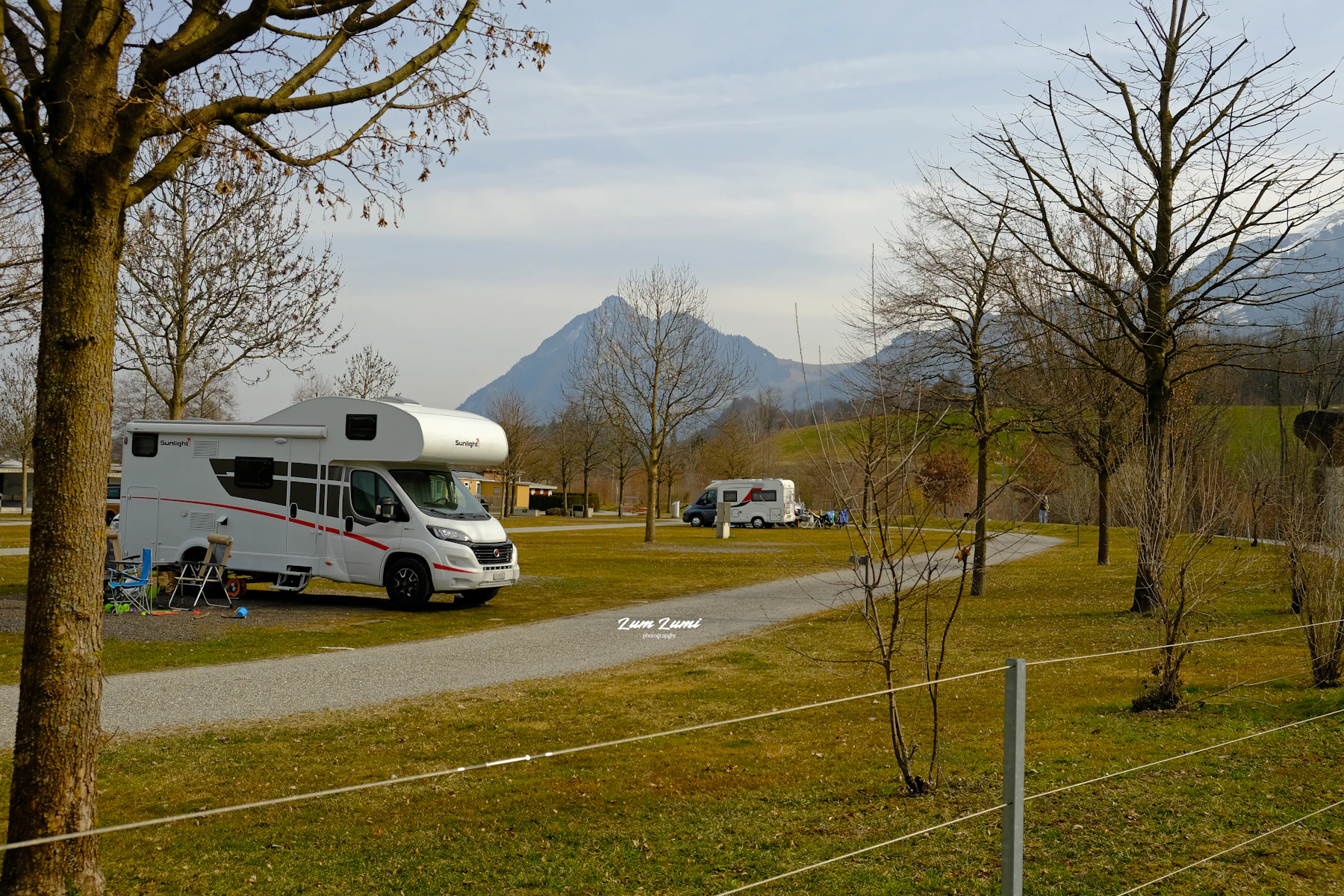
Free camping and Stellplätze in Germany
Germany's version of the aire is the Stellplatz, and it is a much looser category than the French one. Some are proper municipal sites with water and a waste drain. Plenty are a marked corner of a car park with nothing on it at all.
01 · Map
Free stopovers in Germany
Open any pin for its fee, its services and the date it was last checked. For wild camping, read the rules below rather than the map. Where this comes from
Open the full mapMapLibre GL · OpenFreeMap · loads on scroll
02 · Recently checked
Stopovers checked most recently
 StellplatzFee not stated
Der Talhof -Wohnmobilstellplatz
Baden-Württemberg · N 48.07°
- TrinkwasserTrinkwasser: Nicht bestätigt, verlass dich nicht darauf
- ToilettenToiletten: Nicht bestätigt, verlass dich nicht darauf
- DuschenDuschen: Nicht bestätigt, verlass dich nicht darauf
- StromStrom: Nicht bestätigt, verlass dich nicht darauf
- EntsorgungsstationEntsorgungsstation: Nicht bestätigt, verlass dich nicht darauf
Checked Aug 23
 StellplatzFee not stated
Reisemobilstellplatz Geisingen
Baden-Württemberg · N 47.92°
- TrinkwasserTrinkwasser: Nicht bestätigt, verlass dich nicht darauf
- ToilettenToiletten: Nicht bestätigt, verlass dich nicht darauf
- DuschenDuschen: Nicht bestätigt, verlass dich nicht darauf
- StromStrom: Nicht bestätigt, verlass dich nicht darauf
- EntsorgungsstationEntsorgungsstation: Nicht bestätigt, verlass dich nicht darauf
Checked Aug 23
StellplatzFee not statedSCHUSSENRIEDER Wohnmobilstellplatz
Baden-Württemberg · N 48.00°
- TrinkwasserTrinkwasser: Nicht bestätigt, verlass dich nicht darauf
- ToilettenToiletten: Nicht bestätigt, verlass dich nicht darauf
- DuschenDuschen: Nicht bestätigt, verlass dich nicht darauf
- StromStrom: Nicht bestätigt, verlass dich nicht darauf
- EntsorgungsstationEntsorgungsstation: Nicht bestätigt, verlass dich nicht darauf
Checked Aug 23
 StellplatzFee not stated
Wohnmobilbahnhof Blumberg
Baden-Württemberg · N 47.84°
- TrinkwasserTrinkwasser: Nicht bestätigt, verlass dich nicht darauf
- ToilettenToiletten: Nicht bestätigt, verlass dich nicht darauf
- DuschenDuschen: Nicht bestätigt, verlass dich nicht darauf
- StromStrom: Nicht bestätigt, verlass dich nicht darauf
- EntsorgungsstationEntsorgungsstation: Nicht bestätigt, verlass dich nicht darauf
Checked Aug 23
Most recently checked first, so the ones at the top are the least likely to have changed since.
03 · Regions · 7
By region
04 · Every place
All 472 places in Germany
Baden-Württemberg 140 places
- Caravanstellplatz im Fautenhau
- Der Talhof -Wohnmobilstellplatz
- Flößerwasen
- Gasthaus Krone
- Güglingen am Schwimmbad
- Idler Weingut Stellplatz
- Jagstzell Wohnmobilplatz
- Kienzlewiesen in Schwenningen
- Laufenburg: Reisemobilstellplatz am Andelsbach in Laufenburg (Baden)
- Parkplatz "Lehwiese"
- Reisemobil-Service-Station Basilika in Walldürn
- Reisemobilhafen Ost
- Reisemobilstellplatz "Blaue Brücke" - Bad Niedernau
- Reisemobilstellplatz "Blaue Brücke" - Bad Niedernau
- Reisemobilstellplatz An der Kapfhalle - Ochsenhausen
- Reisemobilstellplatz Gaildorf
- Reisemobilstellplatz Gaildorf
- Reisemobilstellplatz Geisingen
- SCHUSSENRIEDER Wohnmobilstellplatz
- Seedamm Wohnmobilstellplätz
- Stellplätze Britzingen
- Wasemweg
- Weingut Lena Flubacher
- Weingut und Weinschenke Zimmermann
- Weinheim Schlosspark
- Wohnmobil Stellplatz Stadt Weinsberg
- Wohnmobil-Naturstellplatz Aasrücken
- Wohnmobilbahnhof Blumberg
- Wohnmobilhalt Neckarsulm
- Wohnmobilpark Bruchsal
- Wohnmobilpark Schwarzach "Am Wildpark"
- Wohnmobilpark Schwarzach am Wildpark
- Wohnmobilstellplatz Hockenheim am Aquadrom
- Wohnmobilstellplatz "Alte Kelter" Haßmersheim
- Wohnmobilstellplatz "Alte Kelter" Haßmersheim
- Wohnmobilstellplatz "Alter Bahnhof"
- Wohnmobilstellplatz „Am Stadtwald“
- Wohnmobilstellplatz "Auf dem Kies" in Besigheim
- Wohnmobilstellplatz "In der Au" Eberbach
- Wohnmobilstellplatz "Neckarlauer" Eberbach
- Wohnmobilstellplatz „Zur Friedrichfeste“
- Wohnmobilstellplatz Alpirsbach
- Wohnmobilstellplatz am Bahnhof
- Wohnmobilstellplatz am Freibad
- Wohnmobilstellplatz am Freibad Lauffen a.N.
- Wohnmobilstellplatz am Neckar in Obrigheim
- Wohnmobilstellplatz am Neckarufer
- Wohnmobilstellplatz am Rheinufer
- Wohnmobilstellplatz am Schloß
- Wohnmobilstellplatz am Schloss in Külsheim
- Wohnmobilstellplatz am Seepark Linzgau
- Wohnmobilstellplatz am Sonnenpark
- Wohnmobilstellplatz am Zellersee
- Wohnmobilstellplatz an der Breg
- Wohnmobilstellplatz an der Ehmetsklinge
- Wohnmobilstellplatz an der Ehmetsklinge
- Wohnmobilstellplatz an der Steinlach
- Wohnmobilstellplatz Aquadrom Hockenheim
- Wohnmobilstellplatz Auwiese Schwäbisch Hall
- Wohnmobilstellplatz Bad Mergentheim
- Wohnmobilstellplatz Bad Wurzach
- Wohnmobilstellplatz Baden-Baden
- Wohnmobilstellplatz beim Freibad | Güglingen
- Wohnmobilstellplatz Benningen am Neckar
- Wohnmobilstellplatz Blaubeuren
- Wohnmobilstellplatz Bressel
- Wohnmobilstellplatz der Genossenschaftskellerei Heilbronn eG
- Wohnmobilstellplatz der Stadt Hornberg
- Wohnmobilstellplatz Donaueschingen
- Wohnmobilstellplatz Ehingen
- Wohnmobilstellplatz Elzwiese
- Wohnmobilstellplatz Erbach
- Wohnmobilstellplatz Ettlingen am Parkplatz Schwimmbad
- Wohnmobilstellplatz Felsenparkplatz Engen
- Wohnmobilstellplatz Firstwaldstraße
- Wohnmobilstellplatz Freibad Balingen
- Wohnmobilstellplatz Freizeitanlage Mudau
- Wohnmobilstellplatz Freudenberg am Main
- Wohnmobilstellplatz Gemminger Straße - Schwaigern
- Wohnmobilstellplatz Hallenbad Villingen
- Wohnmobilstellplätz Hardtparkplatz Ebhausen/Ebershardt
- Wohnmobilstellplatz Hausach
- Wohnmobilstellplatz Heilbronn
- Wohnmobilstellplatz Heiligkreuzsteinach
- Wohnmobilstellplatz Hermannsplatz Murr
- Wohnmobilstellplatz Herrischried
- Wohnmobilstellplatz Hirsch Oberberken
- Wohnmobilstellplatz Hirschbach
- Wohnmobilstellplatz im Donaupark Tuttlingen
- Wohnmobilstellplatz im Donautal
- Wohnmobilstellplatz im Grüner - Bretten
- Wohnmobilstellplatz im Metterbogen Bietigheim-Bissingen
- Wohnmobilstellplatz im Ruiter Tal - Bretten
- Wohnmobilstellplatz im Wiesental
- Wohnmobilstellplatz in Forchtenberg
- Wohnmobilstellplatz Jagstzell
- Wohnmobilstellplatz Kirchberg/Jagst
- Wohnmobilstellplatz Ladenburg
- Wohnmobilstellplatz Langenburg
- Wohnmobilstellplatz Lauda (Badstraße)
- Wohnmobilstellplatz Limes-Thermen
- Wohnmobilstellplatz Markelsheim
- Wohnmobilstellplatz Mauer
- Wohnmobilstellplatz Mineralfreibad Vellberg
- Wohnmobilstellplatz Neckargerach
- Wohnmobilstellplatz Nordrach
- Wohnmobilstellplatz Oberdielbach
- Wohnmobilstellplatz Obertsrot
- Wohnmobilstellplatz Obrigheim
- Wohnmobilstellplatz Oppenau
- Wohnmobilstellplatz Osterburken
- Wohnmobilstellplatz Out&Back
- Wohnmobilstellplatz Parkplatz Ettlinger Allee
- Wohnmobilstellplatz Ravensburg
- Wohnmobilstellplatz Reißerparkplatz
- Wohnmobilstellplatz Rudolf-Then-Halle
- Wohnmobilstellplatz Salinenpark Bad Rappenau
- Wohnmobilstellplatz Schönbrunn
- Wohnmobilstellplatz Schwetzingen
- Wohnmobilstellplatz Schwetzingen
- Wohnmobilstellplatz Seckach
- Wohnmobilstellplatz Sportpark Rems
- Wohnmobilstellplatz Stadt Hausach
- Wohnmobilstellplatz Stadt Möckmühl
- Wohnmobilstellplatz Stadt Möckmühl
- Wohnmobilstellplatz Steinheim an der Murr
- Wohnmobilstellplatz Sulzbach-Laufen
- Wohnmobilstellplatz Talaue am Kloster Maulbronn
- Wohnmobilstellplatz Tuttlingen
- Wohnmobilstellplatz Uttenweiler
- Wohnmobilstellplatz Veringenstadt
- Wohnmobilstellplatz Vitryallee - Tauberbischofsheim
- Wohnmobilstellplatz Waldfreibad Eningen
- Wohnmobilstellplatz Wasemweg
- Wohnmobilstellplatz Weinsberg
- Wohnmobilstellplatz Wiesensteig - Sommerbergstraße
- Wohnmobilstellplätze Erbach
- Wohnmobilstellplätze Langenau
- Wohnmobilstellplätze Schöntal - Wiesensteig
- Ziegelwasen
Bavaria 91 places
- An den Egerauen
- Autohof Thiersheim
- Busbahnhof Waldsassen
- Donauparkplatz
- Feng-Shui-Kurpark Lalling Wohnmobilstellplatz
- Festplatz Schwandorf
- Häckerscheune Volkamer Stellplatz
- Korbiniansbrücke Freising (Luitpoldstraße)
- Leupoldsgrün Zukunft Am Anger
- Naturfreundehaus Wernersreuth
- Parking Aschbacher Straße - Schlüsselfeld
- Parkplatz am Wellenfreibad Peiting
- Parkplatz an der Bierfeldstraße - P1 Zentrum
- Parkplatz Grünewaldstraße
- Reisemobilplatz am Volkspark Marienberg
- Reisemobilstellplatz am Festplatz
- Reisemobilstellplatz Dietfurt
- Reisemobilstellplatz Neukirchen-Balbini
- Reisemobilstellplatz Velden an der Vils
- Schwarzfelder Hof
- Stadt Rieneck Kurzzeitstellplatz für Wohnmobile
- Stellplatz Altmühlwiesen, Leutershausen
- Stellplatz am Friedberger Baggersee
- Stellplatz am Güßgraben
- Stellplatz an der Kammel
- Stellplatz Rain
- Stellplatz Velden - Toni-Wolf-Platz
- Stellplatz Wallfahrtskirche Herrgottsruh
- Tiefenellern
- Viehmarktplatz
- Weingut Leo Langer Camping
- Winterhafen Racklau
- Wohnmobil Stellplatz am Festplatz/Woffenbacher Straße
- Wohnmobil- und Wohnwagenstellplatz Elfershausen
- Wohnmobil-Stellplatz "Köglmühle"
- Wohnmobil-Stellplatz Sulzbach-Rosenberg
- Wohnmobil-Stellplatz Wiesau
- Wohnmobilstellplatz "Schloss Weissenstein" Pommersfelden
- Wohnmobilstellplatz Abtswinder Schwimmbad
- Wohnmobilstellplatz Altstadt Amorbach
- Wohnmobilstellplatz am Einersheimer Tor
- Wohnmobilstellplatz am Festplatz an der Tauber - Röttingen
- Wohnmobilstellplatz am Limesbad
- Wohnmobilstellplatz am Ölschnitzse
- Wohnmobilstellplatz am Schwertfegertor
- Wohnmobilstellplatz am Sportplatz
- Wohnmobilstellplatz am Sportplatz Euerbach
- Wohnmobilstellplatz am Tannenberg
- Wohnmobilstellplatz am Waldbad
- Wohnmobilstellplatz Am Waldbad Grafenwöhr
- Wohnmobilstellplatz am Waldbad Neustadt
- Wohnmobilstellplatz Bad Berneck
- Wohnmobilstellplatz Dorfplatz Motten
- Wohnmobilstellplatz Dutzendteich
- Wohnmobilstellplatz Erbendorf
- Wohnmobilstellplatz Festplatz am Main Kreuzwertheim
- Wohnmobilstellplatz Festplatz Scheßlitz
- Wohnmobilstellplatz Feuriger Tatzlwurm
- Wohnmobilstellplatz Freibad "Aquarena" Zapfendorf
- Wohnmobilstellplatz Freibad Plattling
- Wohnmobilstellplatz Garstadt
- Wohnmobilstellplatz Geiselbach
- Wohnmobilstellplatz Geisenfeld
- Wohnmobilstellplatz Gerbrunn
- Wohnmobilstellplatz Goldkronach
- Wohnmobilstellplatz Hauptmoorhalle
- Wohnmobilstellplatz Kreuzwertheim
- Wohnmobilstellplatz Kultur- und Sporthalle - Haibach
- Wohnmobilstellplatz Langendorf
- Wohnmobilstellplatz Lauertalparkplatz - Maßbach
- Wohnmobilstellplatz Laufen
- Wohnmobilstellplatz Lohndorf
- Wohnmobilstellplatz Nersingen
- Wohnmobilstellplatz Neuötting
- Wohnmobilstellplatz Neustadt am Kulm
- Wohnmobilstellplatz Ortsverbindungsstraße Haibach
- Wohnmobilstellplatz P2 Rothenburg ob der Tauber
- Wohnmobilstellplatz P3 Rothenburg ob der Tauber
- Wohnmobilstellplatz Pappenheim
- Wohnmobilstellplatz Röthlein
- Wohnmobilstellplatz Schwarzenbach a.d. Saale
- Wohnmobilstellplatz Sport- und Freizeitzentrum Badria
- Wohnmobilstellplatz Vohenstrauß
- Wohnmobilstellplatz Waischenfeld
- Wohnmobilstellplatz Wellenhallenbad Aquawell
- Wohnmobilstellplatz Wirmsthal
- Wohnmobilstellplatz Wöhrder See
- Wohnmobilstellplatz Yachthafen Miltenberg
- Wohnmobilstellplätze an der Mehrzweckhalle
- Wohnmobilstellplätze Donaupark Deggendorf
- Wohnmobilstellplätze Simbach am Inn
Hesse 50 places
- Am Bürgerhaus Dalherda
- Am Lindheimer Weg
- Bernhardt Vocke Sportzentrum
- Breuberghalle
- Festplatz Hirzenhain
- Fischewosse
- Georgenwald
- Grillplatz Erlegrill
- In der Steinlache
- Klosterfreiheit
- Limesrundweg
- Reisemobilstellplatz "In der Aue"
- Reisemobilstellplatz am Alexanderbad
- Reisemobilstellplatz an der Reichenbergschule
- Reisemobilstellplatz Hotel Glimmesmühle
- Reisemobilstellplatz P2 Turnhagen
- Reisemobilstellplatz Schlüchtern
- Stellplatz "Kolpingstraße" - Bad Hersfeld
- Stellplatz am Festplatz Grandenborn
- Stellplatz am Schloss
- Stellplatz am Sportplatz Gambach
- Stellplatz Hilders - Erlebnisbades Ulsterwelle
- Stellplatz Horlofftalhalle - Echzell
- Stellplatz Ober-Schmitten
- Stellplatz Ranstadt-Dauernheim Sportplatz
- Stellplatz Rosbach vor der Höhe
- Stellplätze Wohnmobile Kirchbrombach
- Wohnmobil-Naturstellplatz Ronneburgblick
- Wohnmobilstellplatz Alsfeld - ruhig, grün, zentral.
- Wohnmobilstellplatz am Aartalsee Bischoffen
- Wohnmobilstellplatz am Borkener See
- Wohnmobilstellplatz am Freibad Ringallee
- Wohnmobilstellplatz am Rothaarsteig Haiger
- Wohnmobilstellplatz Am Steines
- Wohnmobilstellplatz am Tenniscenter Korbach
- Wohnmobilstellplatz Auf der Unteraue
- Wohnmobilstellplatz Beerfelden
- Wohnmobilstellplatz Breitwiese
- Wohnmobilstellplatz Bürgerhaus in Nidda
- Wohnmobilstellplatz Groß-Umstadt
- Wohnmobilstellplatz Horbach
- Wohnmobilstellplatz Lich
- Wohnmobilstellplatz Muschenheim
- Wohnmobilstellplatz Neustadt (Hessen)
- Wohnmobilstellplatz Oberrosphe
- Wohnmobilstellplatz Oestrich-Winkel
- Wohnmobilstellplatz Schenklengsfeld
- Wohnmobilstellplatz Tierpark Sababurg
- Wohnmobilstellplatz Waldkappel
- Wohnmobilstellplätze am Aquarena
Lower Saxony 74 places
- Am Bahnhof Ahlhorn
- Am Hallenbad Twist
- Am Hochbad
- Angerplatz
- Ausweichwohnmobilstellplatz Festwiese Nienburg/Weser
- Balje Am Natureum Niederelbe
- Eschede Wohnmobilstellplatz
- Freibad Fürstenau
- Middn in Dörp - Barnstorf
- Parkplatz "Alte Brauerei"
- Parkplatz am Museumsdorf Cloppenburg
- Reisemobil-Stellplatz "Am Meerwasser-Hallenwellenbad"
- Reisemobil-Stellplatz Schillig
- Reisemobilstellplatz "Auf der Nesse"
- Reisemobilstellplatz "Große Bleiche"
- Reisemobilstellplatz am Brunnentheater - Bad Helmstedt
- Reisemobilstellplatz Am Remisengelände
- Reisemobilstellplatz Freibad Vechta
- Reisemobilstellplatz Lauenau Am Felsenkeller
- Reisemobilstellplatz Uplengen "An der Uferstraße"
- Reisemobilstellplatz Weener "Am Alten Hafen"
- Stellplatz "In der Fluth"
- Stellplatz Büddenstedt
- Weser-Ems Hallen Oldenburg
- Wohnmobil-Stellplatz Sportzentrum Ottersberg
- Wohnmobil-Stellplätze am Lohneum
- Wohnmobilpause am Dörpshus Vreschen-Bokel
- Wohnmobilpause am Eisenhüttenplatz
- Wohnmobilpause an der Paddel-Pedalstation
- Wohnmobilpause beim Dorfplatz in Augustfehn II
- Wohnmobilplatz Hitzacker, Bleichwiese
- Wohnmobilplätze Schöningen
- Wohnmobilstation "Zu den Visselwiesen"
- Wohnmobilstellplatz "Am Färberplatz" Uchte
- Wohnmobilstellplatz "Am Nordhafen" an der Northeimer Seenplatte
- Wohnmobilstellplatz am Berliner Kreisel
- Wohnmobilstellplatz am Hafen
- Wohnmobilstellplatz am Meerbach
- Wohnmobilstellplatz am Schützenplatz
- Wohnmobilstellplatz an der Museums-Eisenbahn Bruchhausen-Vilsen
- Wohnmobilstellplatz Beverstedt
- Wohnmobilstellplatz Bockenem
- Wohnmobilstellplatz Dassel am Sollingbad
- Wohnmobilstellplatz Elze
- Wohnmobilstellplatz Esterholzer Schleuse
- Wohnmobilstellplatz Fähranleger Darchau
- Wohnmobilstellplatz Hengstforde
- Wohnmobilstellplatz Hengstforde
- Wohnmobilstellplatz Hochwald Unterlüß
- Wohnmobilstellplatz Hohnsensee
- Wohnmobilstellplatz Hohnstorf
- Wohnmobilstellplatz in Freden (Leine) Wohnmobilstellplatz · Leinebergland · 95 m
- Wohnmobilstellplatz Löningen am Freibad
- Wohnmobilstellplatz Lüchow
- Wohnmobilstellplatz mit Weserblick
- Wohnmobilstellplatz Neuer Marktplatz Ankum
- Wohnmobilstellplatz Nienburg/Weser
- Wohnmobilstellplatz Oesede
- Wohnmobilstellplatz Ölmühle Solling
- Wohnmobilstellplatz Quellenbad Schneverdingen
- Wohnmobilstellplatz Rio Gande
- Wohnmobilstellplatz Rosiener See
- Wohnmobilstellplatz Seefeld
- Wohnmobilstellplatz Stabkirche Hahnenklee
- Wohnmobilstellplatz Steimbke
- Wohnmobilstellplatz Steimbke
- Wohnmobilstellplatz Steyerberg
- Wohnmobilstellplatz Viehmarktplatz Apen
- Wohnmobilstellplatz Vitamar Bad Lauterberg
- Wohnmobilstellplatz Werdum
- Wohnmobilstellplätze am Hallenfreibad
- Wohnmobilstellplätze Hallenbad Springe
- Wohnmobilstellplätze in Alfeld (Leine)
- WoMo-Park Bad Nenndorf
North Rhine-Westphalia 77 places
- Am neuen Wasserwerk Rheinbach
- Am Rotbachsee
- Augustdorf Wohnmobilstellplatz
- FGOe Wohnwagenstellfläche
- Landgasthof Restaurant Laibach Stellplatz
- Museumshof Rahden
- Ortsteil Diestedde
- Ostwestfalenhalle Verl
- Parkplatz hinter den Amtshäusern
- Parkplatz Ohler Wiesen
- Parkplatz P9 (Bredenweg) Stadt Brakel
- Rathaus Wadersloh
- Reisemobilstellplatz am Schloss Wickrath
- Reisemobilstellplatz am Solegarten St. Jakob
- Reisemobilstellplatz Lippesee
- Reisemobilstellplätze Aquarena - Pulheim-Stommeln
- Seilerblick
- Stellplatz Brüggemann
- Stellplatz Freibad Herscheid
- Stellplatz Neheim
- Stellplatz Ostbevern
- Wohnmobil Kolter
- Wohnmobil Stellplatz Aaseebad
- Wohnmobil-PARKplatz Schulring / Ecke Bauxhof
- Wohnmobil-Stellplatz Bestwig-Zentrum
- Wohnmobil-Stellplatz Freienohl
- Wohnmobil-Stellplatz Heinz Nixdorf MuseumsForum
- Wohnmobil-Stellplatz Heugraben
- Wohnmobil-Stellplatz Sauerländer Besucherbergwerk
- Wohnmobilhafen Brilon Schützenhalle
- Wohnmobilplatz am Familienbad Nattenberg
- Wohnmobilplatz Schießhalle Blomberg
- Wohnmobilstation am Bahnhof Darfeld
- Wohnmobilstation am Sportzentrum Darfeld
- Wohnmobilstellplatz Alme
- Wohnmobilstellplatz Am Alten Freibad Engelskirchen
- Wohnmobilstellplatz am Badesee Lahde
- Wohnmobilstellplatz am Hallen- und Freibad Rhede
- Wohnmobilstellplatz am Hallenbad Balve
- Wohnmobilstellplatz Am Hallenbad Leichlingen
- Wohnmobilstellplatz am Kirmesplatz
- Wohnmobilstellplatz am Westpark Werdohl
- Wohnmobilstellplatz Bedburg-Alt-Kaster
- Wohnmobilstellplatz Coesfeld
- Wohnmobilstellplatz Dammweg - Warstein
- Wohnmobilstellplatz Dhünn
- Wohnmobilstellplatz Emstor
- Wohnmobilstellplatz Freibad Kalletal Hohenhausen
- Wohnmobilstellplatz Giller
- Wohnmobilstellplatz Haus Dassel
- Wohnmobilstellplatz Heimathaus Mastholte
- Wohnmobilstellplatz Herdecke
- Wohnmobilstellplatz Hüttendyk - Dülmen
- Wohnmobilstellplatz Im Grengel Engelskirchen
- Wohnmobilstellplatz Kanalstraße
- Wohnmobilstellplatz Lennepromenade
- Wohnmobilstellplatz Mülheim an der Ruhr
- Wohnmobilstellplatz Musikschule Meinerzhagen
- Wohnmobilstellplatz Panoramabad Velbert-Neviges
- Wohnmobilstellplatz Radevormwald
- Wohnmobilstellplatz Reisemobil Service Freizeit
- Wohnmobilstellplatz Rietberg-Mastholte
- Wohnmobilstellplatz Rietberg, Rottwiese
- Wohnmobilstellplatz Schnabelsmühle
- Wohnmobilstellplatz Schützenplatz Medebach
- Wohnmobilstellplatz Siegdamm
- Wohnmobilstellplatz Siegen
- Wohnmobilstellplatz Siegen-Weidenau
- Wohnmobilstellplatz Stadtlohn
- Wohnmobilstellplatz Volksbankarena-Sauerlandhalle
- Wohnmobilstellplatz Waldschwimmbad Klatenberg
- Wohnmobilstellplatz Wenden (Rathaus)
- Wohnmobilstellplatz Wisseraue - Morsbach
- Wohnmobilstellplatz Wupperaue
- Wohnmobilstellplätze „Am Ruhrtalradweg“ Wickede
- Wohnmobilstellplätze "Siegbrücke"
- Wohnmobilstellplätze Kierspe
Rhineland-Palatinate 33 places
- Am Bergbad Heltersberg
- Burg Lichtenberg
- Carentaner Platz
- Elmstein
- Festplatz Müden (Mosel)
- Festplatz Osthofen
- Herrngarten
- Lemberger Weiher
- Peter Hohn
- Reisemobilstellplatz "Am Sommerriedstadion"
- Reisemobilstellplatz Freibad Gemünden
- Schmisserhang
- Stellplatz Klingenbachhalle
- Weingut Hans Abel Wohnmobilstellplatz
- Wohnmobil Stellplatz Jettenbach
- Wohnmobilstellplatz Albisheim
- Wohnmobilstellplatz Altenkirchen
- Wohnmobilstellplatz am Waldschwimmbad, Hamm
- Wohnmobilstellplatz Eßweiler
- Wohnmobilstellplatz Hahnstätten
- Wohnmobilstellplatz Hambacher Schloss Kellerei
- Wohnmobilstellplatz Haus des Bürgers Höheinöd
- Wohnmobilstellplatz Katzenelnbogen
- Wohnmobilstellplatz Klausen
- Wohnmobilstellplatz Kronenberghalle
- Wohnmobilstellplatz Lambrecht
- Wohnmobilstellplatz Masburg
- Wohnmobilstellplatz Nassau
- Wohnmobilstellplatz Offenbach an der Queich
- Wohnmobilstellplatz Schiersfeld
- Wohnmobilstellplatz Schifferstadt
- Wohnmobilstellplatz Stadthalle Münstermaifeld
- Wohnmobilstellplätze Zentrum Münchweiler
05 · How it works here
Free camping in Germany, explained
The German word you need is Stellplatz, plural Stellplätze, more precisely Wohnmobilstellplatz. It is a place set aside for motorhomes to park, usually run by a Gemeinde or by a private operator, and it is the nearest German thing to a French aire. That is where the similarity stops. A French aire carries an expectation about what is on it. Stellplatz carries almost none.
Some are what you would hope for: numbered bays on hardstanding, a drinking water tap, a drain for grey and chemical waste, a machine that takes coins or a card. Some are a strip of gravel behind a swimming pool with a sign on a post and nothing else. Many are free to park on and charge separately for water, electricity and the waste dump. Others charge for the night. The variation is the defining feature, so do not plan a trip on the assumption that a Stellplatz is a service point. Plan the service stop separately.
Sleeping in a parked vehicle: what is actually established
Germany does distinguish between parking a vehicle and camping in it, and the distinction is the whole ball game. The concept you will see repeated everywhere in English is Wiederherstellung der Fahrtüchtigkeit, restoring your fitness to drive. One large city has set that position out in writing, and it is the clearest statement of the line you are being asked to stay on.
The Landeshauptstadt München set the position out in writing in a letter from its Berufsmäßiger Stadtrat to city councillors, dated 19 June 2018 and published in the city’s own council information system. On motorhomes it says:
Das Aufstellen von Wohnmobilen zu Wohnzwecken ist kein Gemeingebrauch einer Straße, sondern Sondernutzung. Das Ruhen oder Übernachten in Wohnmobilen im öffentlichem Verkehrsraum auf Reisen zum Zwecke der Wiederherstellung der körperlichen Fahrtüchtigkeit ist erlaubter Gemeingebrauch, darüber hinaus aber genehmigungspflichtige Sondernutzung.
Our summary, and the German is the authority: putting a motorhome up for residential purposes is not ordinary public use of a street, it is Sondernutzung, special use, which needs permission. Resting or spending the night in a motorhome in public traffic space, while traveling, for the purpose of restoring your physical fitness to drive, is permitted ordinary public use. Anything beyond that is special use and needs permission.
The same letter says the parallel thing about caravans and camping trailers, and adds that parking a motorhome is otherwise unrestricted wherever car parking is allowed, provided the vehicle is roadworthy and registered.
Three things follow from that:
- It is one city, not a national rule. Munich is a large municipal authority stating how it applies the law. Sondernutzung is governed by each Land’s road law rather than by one federal text, so another Gemeinde can draw the line somewhere else. Check the local rules where you actually stop.
- Keep everything inside the van. The widely repeated version of this rule says that deploying an awning, putting out chairs and a table, or dropping levelling ramps converts parking into camping. The Munich letter draws its line at “darüber hinaus”, beyond that, without listing what counts. Nothing deployed is the safe side of a line nobody has drawn precisely.
- Do not plan the night around a 10 hour cap. You will read that the rest is capped at ten hours. That figure is folklore rather than law. What the Munich letter permits is a rest while traveling, so arrive late, sleep, and move on in the morning.
The parking rules that are in the federal text
Two things in the Straßenverkehrs-Ordnung do apply directly and are worth knowing if you are in a large vehicle or towing:
- Over 7.5 tonnes. § 12 Abs. 3a StVO bans regular parking between 22:00 and 06:00, and on Sundays and public holidays, for vehicles over 7.5 t permissible total mass and trailers over 2 t, inside built-up areas in purely and generally residential zones, in special zones serving recreation, in spa areas and in clinic areas. It does not apply on parking areas signed for it. Most motorhomes sit well under 7.5 t, but not all do.
- Trailers. § 12 Abs. 3b StVO: a trailer with no towing vehicle attached may not be parked for longer than two weeks, except on parking areas signed for it.
Umweltplakette and Umweltzonen
Some German cities have a signed Umweltzone, a low emission zone. To drive into one your vehicle needs an Umweltplakette, a sticker on the windshield, and you have to have it before you get there. The Umweltbundesamt, the federal environment agency, states the mechanism plainly: only vehicles bearing a sticker for the low emission zone may enter the zone, and the color of the sticker is determined by the tax class and Euro standard recorded in the vehicle registration document.
The sticker itself is set out in the 35. BImSchV, the federal regulation on labelling low-emission vehicles. Red is emission group 2, yellow is group 3, green is group 4. It goes clearly visible on the inside of the windshield. It is issued by registration authorities and by emissions testing bodies recognized under road traffic law. Vehicles registered abroad are covered by the regulation: where the documents do not show compliance with the relevant EU emissions directives, the regulation classifies the vehicle by its date of first registration and engine type.
The practical point for a visiting driver is timing, not policy. This is a sticker you buy in advance, and the zones are signed at the boundary rather than announced on the approach roads out of town. Check the Umweltbundesamt’s own list of zones against the cities you plan to drive into, and buy the sticker before you leave home. Cities are added and boundaries move, and there is nowhere to buy one at the zone edge.
What changes with the season
Germany runs a real winter, and the thing that catches people out is water rather than snow. Water points on open-air stopovers are commonly shut off over the cold months because standing water in an exposed pipe or tap freezes and splits it. That is a general mechanism, not a rule, and it applies to municipal sites and private ones alike.
What follows from it: in winter, assume a Stellplatz is a place to park and nothing more, and fill up where you know you can. Toilet and waste disposal points can close for the same reason. Elevation matters more than latitude for this, so a site in the Schwarzwald or the Bayerischer Wald can be shut down for the season while a similar site on the Rhine is not.
Where a site publishes opening hours, they are on its record. Where a record shows none, check the Gemeinde’s own page or plan a fallback for that night. An empty field is not a promise that the site is open all year.
See the map
Everything described above is plotted on the Germany map. German place data comes from OpenStreetMap contributors under the ODbL 1.0.
Seven states have their stopovers written up one by one, each page carrying the link to whatever the Gemeinde, the Stadt or the local tourism board publishes about that site: Bavaria, Baden-Württemberg, North Rhine-Westphalia, Hesse, Lower Saxony, Rhineland-Palatinate and Schleswig-Holstein. Germany has no national register of Stellplätze the way France has one of its aires, so those links go to 270-odd separate municipal sites rather than to one database. That is the reason a Stellplatz page here tells you less than a French aire page does, and the reason the entrance board matters more.
The sign wins
The posted sign at the entrance and the Gemeinde’s current guidance beat this page, every time. Signs get added, height barriers get fitted, a free site starts charging, a municipality decides overnight stays are no longer welcome and puts up a board saying so. None of that reaches us the day it happens. Read the sign, and if the sign and this page disagree, the sign is right.
Where the numbers here come from: 358 German Stellplätze, spread across seven states, each with a full page written from the Gemeinde’s or the operator’s own listing and that listing linked so you can check it yourself. The map shows those and nothing else, so every pin on it has a page behind it. A further 682 places carrying a free label in OpenStreetMap are logged and not yet checked against their operator, which is why a blank stretch of map means unwritten rather than empty. What the data covers, and what it does not
06 · Frequently asked
Coming to Germany.
Is a Stellplatz free?
Sometimes. The common German pattern is free or cheap to park, with a charge for services: water on a coin or token meter, electricity on a card, and a fee at the waste dump. Others charge a flat overnight rate and a few are free outright. Carry coins and a card, and treat the machine at the entrance as the price list, because free to park and paid for services is the arrangement you will meet most often.
Can I sleep in my van at a German motorway rest stop?
Read the board at the entrance, because the two things you will see signed run on different rules. An Autohof is a separate private business reached from a junction, so the operator sets the rules and normally posts them. A Raststätte sits on the motorway itself, and an unstaffed motorway Parkplatz has nobody to ask at all, so the posted sign is all you have to go on. If nothing on it permits an overnight stay, drive on to a Stellplatz. Truck bays are for trucks in either case.
Do I need the Umweltplakette to drive in Germany?
You need one to enter an Umweltzone, which is a signed low emission zone inside certain cities, not to drive in Germany generally. The 35. BImSchV sets out the sticker: red for emission group 2, yellow for 3, green for 4, displayed clearly on the inside of the windshield. Vehicles registered abroad are covered too, and where the paperwork does not prove the emissions standard the regulation classifies the vehicle by its date of first registration and engine type. Buy it before you travel. There is nowhere to buy one at the zone boundary.
How is a Stellplatz different from a French aire?
Mostly in how much you can assume. A French aire de services usually has fresh water and a drain because that is what the word implies. Stellplatz just means a place set aside to park a Wohnmobil, and the facilities range from a full service point to nothing. Plan the service stop separately from the overnight stop and you will not get caught out.
Is wild camping legal in Germany?
It depends on the Land, and there is no single answer for the country. Camping outside a designated site is governed by federal road law, by each Land's nature and forest legislation, and by local byelaws, so the answer changes when you cross a state line. Check the Land's own nature agency and the Gemeinde for the ground you are actually on, and take a Stellplatz if you want a night you do not have to argue about.